A client needs a broker again at two points: when their mortgage deal ends, and when they sell their home. You’ll usually know about the first, provided the dates in your CRM are right. You often hear about the second too late. Once a home is on the market, your client is dealing with an estate agent, and many agents offer mortgage advice through an in-house or partner adviser.
Every year, 4.6% of your past clients put a property up for sale and another 3% list one to let. On a client bank of 1,000, that’s 76 properties a year. Your CRM’s fixed-rate end date won’t flag any of them, because these clients move before their deal ends.
Opportunity Signals tells you when either moment arrives, so the first call comes from you.
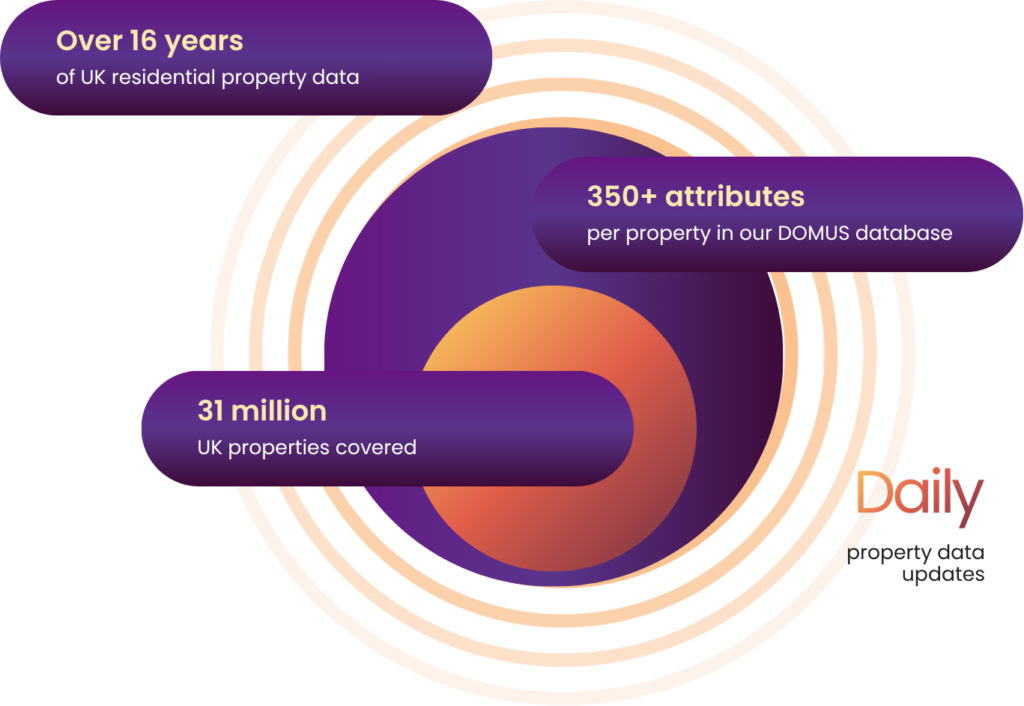
31m
UK homes in our data, updated daily
99.6%
Share of UK sales listings we see
76
Estimated leads per 1,000 clients a year
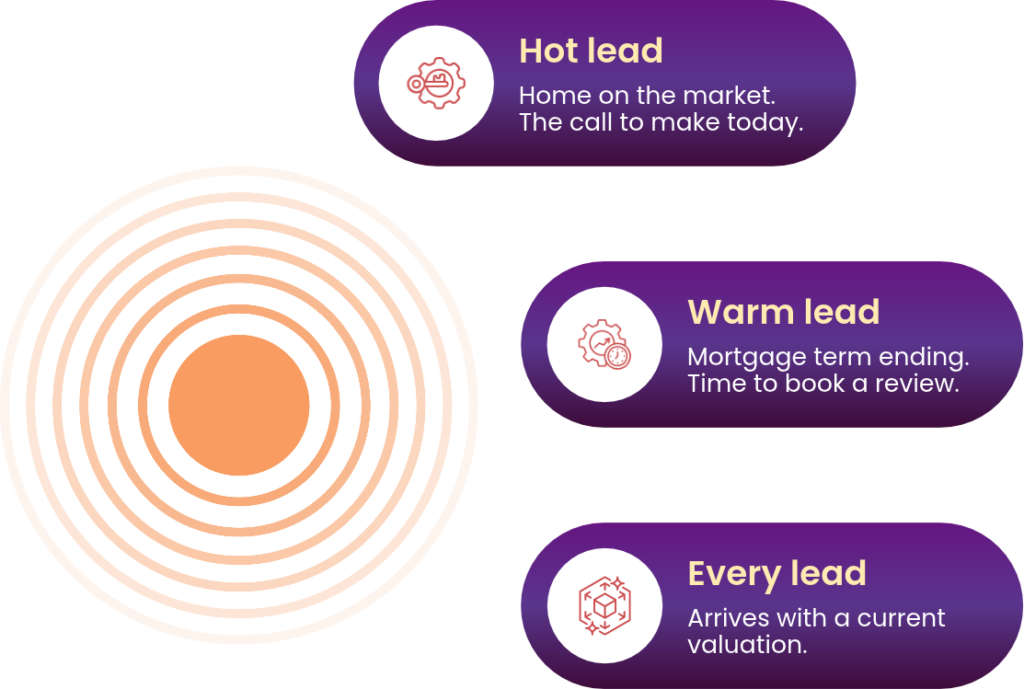
Two kinds of lead
WARM LEAD
Mortgage term ending. Your client’s current deal ends within There’s time to review their options and book a meeting before the lender’s own product transfer offer arrives.
HOT LEADHome on the market. Your client’s property has gone up for sale. They’re likely to need a new mortgage or to port the one they have, and the conversation is open now. This is the call to make today.
Why it matters
Opportunity Signals tells you when either moment arrives, so the first call comes from you.
What comes
with each lead
Every lead arrives with enough detail for your adviser to open the conversation with something useful to say.
The trigger The property address, the lead type and the date it was triggered.
A current valuation A range with a confidence level of low, medium or high.
Property details Such as [property type, bedrooms, tenure, EPC rating].
Delivery A daily file, or the same day through our API.
How it woks
Step
01
Send your addresses
A monthly file of the homes your clients own. We need the property address, not names or contact details.
Step
02
We check them every day
Against TwentyCi’s daily property market data, for listings, sales activity and terms coming to an end.
Step
03
Leads arrive with a valuation
Lead type, valuation range and property details, by daily file or through our API.
Free lookback
See last year’s leads before you sign up
Send us your client addresses and we’ll run them against the last 12 months of our data. If the number is small, you’ve lost nothing. If it’s large, you’ll know what last year cost you.
TwentyCi has worked with UK residential property data for over 16 years. Our DOMUS database holds 350 attributes on 31 million UK properties, and our transaction data follows homes from listing through to exchange. UK lenders already use our automated valuations.
Questions brokers ask
Q1
What data do you need?
Property addresses only. No names, contact details or loan balances.
Q2
What counts as a hot lead?
A sales listing, an online valuation request, a sales progression event or an upfront property search.
Q3
How fast do leads arrive?
Through our API, the same day the activity hits our system.
Q4
What does it cost?
A fee for each property we monitor, plus a fee for each lead. The lookback is free.